How to Install a Monkey Hook
No hammer, no drill, no stud finder. Four steps, straight from the instruction sheet in the pack.
Monkey Hooks are for drywall of any grade, also sold as sheetrock, gypsum board or plasterboard, in spots where there is no stud behind the wall.
- 1
Mark the spot
Pick where the picture should hang and mark an insertion point 1/4 inch above that spot.
- 2
Set the tip
Hold the hook with the tip against the mark and the shaft square to the wall.
- 3
Push and twist
Twist back and forth while you push until the self-boring tip goes through the drywall. If it stops hard, you have found a stud: move over, or use a nail-in hanger there.
- 4
Slide it home
Turn the hook so the shaft follows the hole and slide it through until only the cradle, the small hook, is outside the wall. You may feel it lock into place.
What happens behind the wall
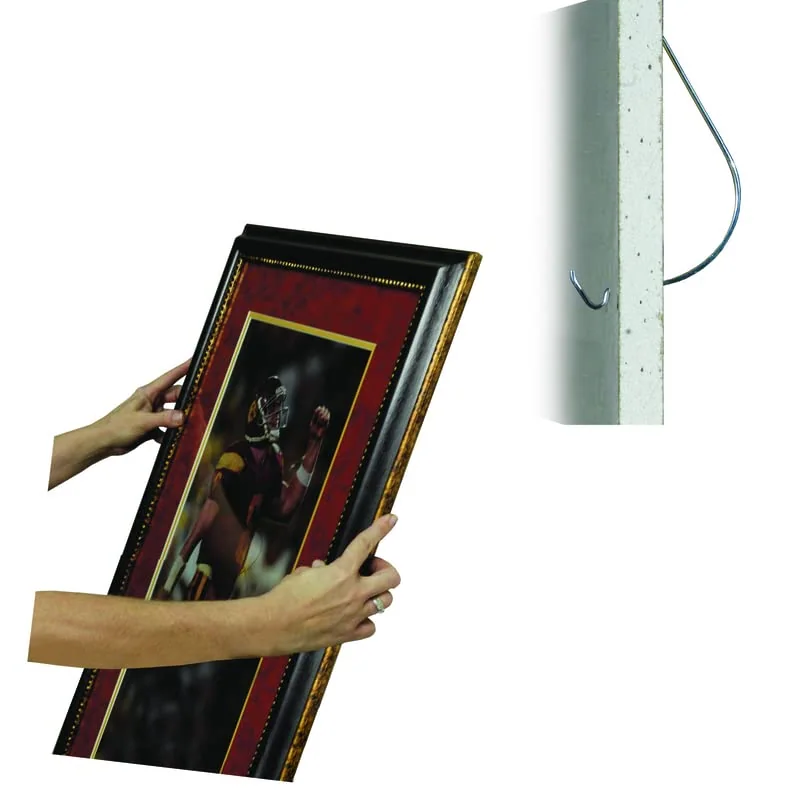
The self-boring tip makes a small hole. The long shaft follows it and lies flat against the back of the drywall, and the cradle, the small hook, stays outside.
When you hang a picture on the cradle, the shaft presses against the back of the board. That spreads the load over the wall board instead of the edge of the hole.
Most house walls
Thicker board, higher gold-pack rating
Drawn to scale: 64 px to the inch. The shaft lies behind the board and the cradle stays outside.
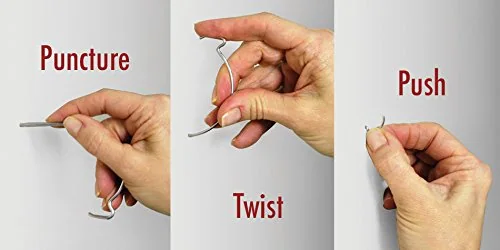
Puncture, twist, push
The three moves in the photo are the whole job. If the tip stops hard after a short way, there is a stud behind that spot: move a little to one side, or put a nail into the stud there.
Pick your hook
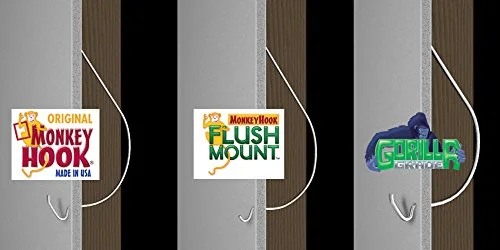
Original for most frames, Gorilla Grade for heavier pieces.
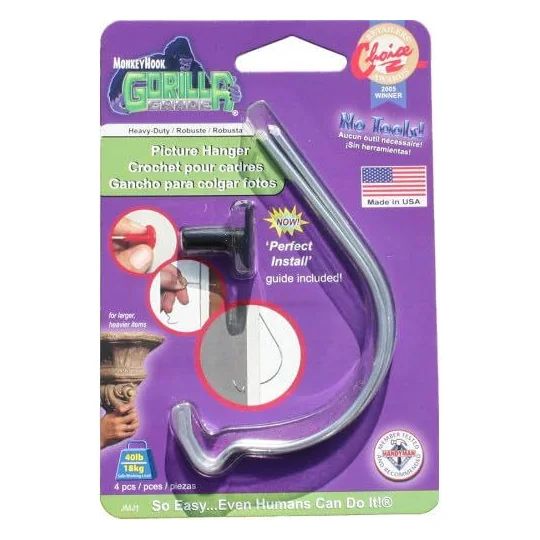
When the hook will not go in
The tip will not bite into the wall
Press harder than feels polite and keep twisting back and forth. A rubber-palmed work glove gives you a better grip on the thin steel than bare fingers.
It stops dead after a short way
You have almost certainly hit a stud or a wooden block. Knock on the wall: a hollow sound means an empty cavity, a dull thud means wood. Move a little to one side, or drive a nail into the wood there instead.
It goes in but will not slide all the way
On outside walls the cavity is often full of insulation. Wiggle the hook side to side as you push, so the shaft works its way past it.
The wall is old plaster
Plaster over wooden lath is harder than drywall and varies from room to room. If the tip will not go through with hand pressure, stop and use a fixing made for plaster.